|
|
|---|

Friday, January 2, 2009

Saturday, December 20, 2008
Little Ice Age

The Little Ice Age (LIA) was a period of cooling occurring after a warmer era known as the Medieval Warm Period or Medieval Climate Optimum.[1] The term was introduced into scientific literature by François E. Matthes in 1939.[2] Climatologists and historians working with local records no longer expect to agree on either the start or end dates of this period, which varied according to local conditions. Some confine the Little Ice Age to approximately the 16th century to the mid 19th century.[3] It is generally agreed that there were three minima, beginning about 1650, about 1770, and 1850, each separated by slight warming intervals.[4]
It was initially believed that the LIA was a global phenomenon; it is now less clear if this is true. The Intergovernmental Panel on Climate Change (IPCC), based on Bradley and Jones, 1993; Hughes and Diaz, 1994; Crowley and Lowery, 2000 describes the LIA as "a modest cooling of the Northern Hemisphere during this period of less than 1°C," and says, "current evidence does not support globally synchronous periods of anomalous cold or warmth over this timeframe, and the conventional terms of 'Little Ice Age' and Medieval Warm Period appear to have limited utility in describing trends in hemispheric or global mean temperature changes in past centuries."[5] There is evidence, however, that the Little Ice Age did affect the Southern Hemisphere.[2]
Dating of the Little Ice Age
There is no agreed beginning year to the Little Ice Age, although there is a frequently referenced series of events preceding the known climatic minima. Starting in the 13th century, pack ice began advancing southwards in the North Atlantic, as did glaciers in Greenland. The three years of torrential rains beginning in 1315 ushered in an era of unpredictable weather in Northern Europe which did not lift until the 19th century. There is anecdotal evidence of expanding glaciers almost worldwide. In contrast, a climate reconstruction based on glacial length[6] shows no great variation from 1600 to 1850, though it shows strong retreat thereafter.
For this reason, any of several dates ranging over 400 years may indicate the beginning of the Little Ice Age:
- 1250 for when Atlantic pack ice began to grow
- 1300 for when warm summers stopped being dependable in Northern Europe
- 1315 for the rains and Great Famine of 1315-1317
- 1550 for theorized beginning of worldwide glacial expansion
- 1650 for the first climatic minimum
In contrast to its uncertain beginning, there is a consensus that the Little Ice Age ended in the mid-19th century.
Northern hemisphere
The Little Ice Age brought bitterly cold winters to many parts of the world, but is most thoroughly documented in Europe and North America. It probably brought about the demise of the Norse settlements in Greenland, which had died out by the 1400s. In the mid-17th century, glaciers in the Swiss Alps advanced, gradually engulfing farms and crushing entire villages. The River Thames and the canals and rivers of the Netherlands often froze over during the winter, and people skated and even held frost fairs on the ice. The first Thames frost fair was in 1607; the last in 1814, although changes to the bridges and the addition of an embankment affected the river flow and depth, hence the possibility of freezes. The freeze of the Golden Horn and the southern section of the Bosphorus took place in 1622. In 1658, a Swedish army marched across the Great Belt to Denmark to invade Copenhagen. The winter of 1794/1795 was particularly harsh when the French invasion army under Pichegru could march on the frozen rivers of the Netherlands, whilst the Dutch fleet was fixed in the ice in Den Helder harbour. In the winter of 1780, New York Harbor froze, allowing people to walk from Manhattan to Staten Island. Sea ice surrounding Iceland extended for miles in every direction, closing that island's harbors to shipping.
The severe winters affected human life in ways large and small. The population of Iceland fell by half, but this was perhaps also due to fluorosis caused by the eruption of the volcano Laki in 1783.[7] Iceland also suffered failures of cereal crops and people moved away from a grain-based diet.[8] The Norse colonies in Greenland starved and vanished (by the 15th century) as crops failed and livestock could not be maintained through increasingly-harsh winters. In North America, American Indians formed leagues in response to food shortages.[9]
One researcher noted that, in many years, "snowfall was much heavier than recorded before or since, and the snow lay on the ground for many months longer than it does today."[10] Many springs and summers were outstandingly cold and wet, although there was great variability between years and groups of years. Crop practices throughout Europe had to be altered to adapt to the shortened, less reliable growing season, and there were many years of death and famine (such as the Great Famine of 1315–1317, although this may have been before the LIA proper). Viticulture entirely disappeared from some northern regions. Violent storms caused massive flooding and loss of life. Some of these resulted in permanent losses of large tracts of land from the Danish, German, and Dutch coasts.[10]
The extent of mountain glaciers had been mapped by the late 19th century. In both the north and the south temperate zones of our planet, snowlines (the boundaries separating zones of net accumulation from those of net ablation) were about 100 m lower than they were in 1975.[11] In Glacier National Park, the last episode of glacier advance came in the late 18th and early 19th century.[12] In Chesapeake Bay, Maryland, large temperature excursions during the Little Ice Age (~1400–1900 AD) and the Medieval Warm Period (~800–1300 AD) possibly related to changes in the strength of North Atlantic thermohaline circulation.[13]
In Ethiopia and Mauritania[citation needed], permanent snow was reported on mountain peaks at levels where it does not occur today. Timbuktu, an important city on the trans-Saharan caravan route, was flooded at least 13 times by the Niger River; there are no records of similar flooding before or since. In China, warm weather crops, such as oranges, were abandoned in Jiangxi Province, where they had been grown for centuries. Also, two periods of most frequent typhoon strikes in Guangdong coincide with two of the coldest and driest periods in northern and central China (AD 1660-1680, 1850-1880).[14] In North America, the early European settlers also reported exceptionally severe winters. For example, in 1607-1608 ice persisted on Lake Superior until June.[10]
Antonio Stradivari, the famous violin maker, produced his instruments during the LIA. It has been proposed that the colder climate caused the wood used in his violins to be denser than in warmer periods, contributing to the tone of Stradivari's instruments.[15]
The Little Ice Age by anthropology professor Brian Fagan of the University of California at Santa Barbara, tells of the plight of European peasants during the 1300 to 1850 chill: famines, hypothermia, bread riots, and the rise of despotic leaders brutalizing an increasingly dispirited peasantry. In the late 17th century, writes Fagan, agriculture had dropped off so dramatically that "Alpine villagers lived on bread made from ground nutshells mixed with barley and oat flour." Finland lost perhaps a third of its population to starvation and disease.[16]
Depictions of winter in European painting
Burroughs (Weather, 1981) analyses the depiction of winter in paintings. He notes that this occurred almost entirely from 1565 to 1665, and was associated with the climatic decline from 1550 onwards. (See illustration above left) He claims (however incorrectly[17]) that before this there were almost no depictions of winter in art, and hypotheses that the unusually harsh winter of 1565 inspired great artists to depict highly original images, and the decline in such paintings was a combination of the "theme" having been fully explored, and mild winters interrupting the flow of painting.
The famous winter paintings by Pieter Brueghel the Elder (e.g. Hunters in the Snow) all appear to have been painted in 1565. Snow also dominates many village-scapes by the Pieter Brueghel the Younger, who lived from 1564 to 1638. Burroughs states that Pieter Brueghel the Younger "slavishly copied his father's designs. The derivative nature of so much of this work makes it difficult to draw any definite conclusions about the influence of the winters between 1570 and 1600...".
Dutch painting of the theme appears to begin with Hendrick Avercamp after the winter of 1608. There is then an interruption of the theme between 1627 and 1640, with a sudden return thereafter; this hints at a milder interlude in the 1630s. The 1640s to the 1660s cover the major period of Dutch winter painting, which fits with the known proportion of cold winters then. The final decline in winter painting, around 1660, does not coincide with an amelioration of the climate; Burroughs therefore cautions against trying to read too much into artistic output, since fashion plays a part. He notes that winter painting recurs around the 1780s and 1810s, which again marked a colder period.
Scottish painting and contemporary records demonstrate that curling and skating were formerly popular outdoor winter sports,[18] but it is now seldom possible to curl outdoors in Scotland due to unreliable conditions. The revival of interest in painting such scenes as Raeburn's Skating Minister may owe as much to the romantic movement, which favoured depictions of dramatic landscapes, as to any meaningful observation on climate.
Southern hemisphere
An ocean sediment core from the eastern Bransfield Basin in the Antarctic Peninsula shows centennial events that the authors link to the Little Ice Age and Medieval Warm Period.[19] The authors note "other unexplained climatic events comparable in duration and amplitude to the LIA and MWP events also appear." The LIA is easily distinguished in the Quelccaya Ice Cap (Peruvian Andes, South America).[20]
The Siple Dome (SD) has a climate event with an onset time that is coincident with that of the LIA in the North Atlantic based on a correlation with the GISP2 record. This event is the most dramatic climate event seen in the SD Holocene glaciochemical record.[21] The Siple Dome ice core also contained its highest rate of melt layers (up to 8%) between 1550 and 1700, most likely due to warm summers during the LIA.[22]
Law Dome ice cores show lower levels of CO2 mixing ratios during 1550-1800 AD, probably as a result of colder global climate.[23]
Sediment cores (Gebra-1 and Gebra-2) in Bransfield Basin, Antarctic Peninsula, have neoglacial indicators by diatom and sea-ice taxa variations during the period of the LIA.[24]
In 1675 the Spanish explorer Antonio de Vea entered San Rafael Lagoon through Río Témpanos (Spanish for Ice Floe River), without mentioning any ice floe, and stated that the San Rafael Glacier did not reach far into the lagoon. In 1766 another expedition noticed that the glacier did reach the lagoon and calved into large icebergs. Hans Steffen visited the area in 1898, noticing that the glacier penetrated far into the lagoon. As of 2001, the border of the glacier has retreated beyond the borders of 1675. [3]
There is limited evidence about conditions in Australia, though lake records in Victoria suggest that conditions, at least in the south of the state, were wet and/or unusually cool. In the north of the continent the limited evidence suggests fairly dry conditions, while coral cores from the Great Barrier Reef show similar rainfall today but with less variability.
Tropical Pacific coral records indicate the most frequent, intense El Niño-Southern Oscillation activity occurred in the mid 17th century, during the Little Ice Age.[25]
Climate patterns
In the North Atlantic, sediments accumulated since the end of the last ice age, nearly 12,000 years ago, show regular increases in the amount of coarse sediment grains deposited from icebergs melting in the now open ocean, indicating a series of 1-2°C (2-4°F) cooling events recurring every 1,500 years or so. The most recent of these cooling events was the Little Ice Age. These same cooling events are detected in sediments accumulating off Africa, but the cooling events appear to be larger, ranging between 3-8°C (6-14°F).[26]
Causes
Scientists have identified two causes of the Little Ice Age from outside the ocean/atmosphere/land systems: decreased solar activity and increased volcanic activity. Research is ongoing on more ambiguous influences such as internal variability of the climate system, and anthropogenic influence (Ruddiman). Ruddiman has speculated that depopulation of Europe, East Asia, and the Middle East during the Black Death, with the resulting decrease in agricultural output and reforestation taking up more carbon from the atmosphere, may have prolonged the Little Ice Age. Ruddiman further speculates that massive depopulation in the Americas after the European contact in the early 1500s had similar effects. [27]
One of the difficulties in identifying the causes of the Little Ice Age is the lack of consensus on what constitutes "normal" climate. While some scholars regard the LIA as an unusual period caused by a combination of global and regional changes, other scientists see glaciation as the norm for Earth and the Medieval Warm Period (as well as the Holocene interglacial period) as the anomalies requiring explanation.[16]
Solar activity
During the period 1645–1715, in the middle of the Little Ice Age, there was a period of low solar activity known as the Maunder Minimum. A growing body of scientific evidence[28] indicates that there is a correlation between low sunspot activity and cooling temperatures[29]. There is not sufficient data to use sunspot numbers to predict temperatures or climate variance, but the coincidence of low sunspot activity (e.g., the Maunder Minimum) with the deepest trough of the Little Ice Age supports such a connection[30]. The Spörer Minimum has also been identified with a significant cooling period near the beginning of the Little Ice Age. Other indicators of low solar activity during this period are levels of the isotopes carbon-14 and beryllium-10.[31].
Volcanic activity
Throughout the Little Ice Age, the world also experienced heightened volcanic activity.[32] When a volcano erupts, its ash reaches high into the atmosphere and can spread to cover the whole of Earth. This ash cloud blocks out some of the incoming solar radiation, leading to worldwide cooling that can last up to two years after an eruption. Also emitted by eruptions is sulfur in the form of SO2 gas. When this gas reaches the stratosphere, it turns into sulfuric acid particles, which reflect the sun's rays, further reducing the amount of radiation reaching Earth's surface. The 1815 eruption of Tambora in Indonesia blanketed the atmosphere with ash; the following year, 1816, came to be known as the Year Without A Summer, when frost and snow were reported in June and July in both New England and Northern Europe.
Ocean Conveyor Shutdown
Another possibility is that there was a shutdown or slowing of Thermohaline circulation, also known as the "great ocean conveyor" or "meridional overturning circulation". The Gulf Stream could have been interrupted by the introduction of a large amount of fresh water to the North Atlantic, possibly caused by a period of warming before the little ice age. There is some concern that shutdown of thermohaline circulation could happen again as a result of global warming [33].
End of Little Ice Age
Beginning around 1850, the climate began warming and the Little Ice Age ended. Some global warming critics believe that Earth's climate is still recovering from the Little Ice Age and that human activity is not the decisive factor in present temperature trends,[34][35] but this idea is not widely accepted. Instead, mainstream scientific opinion on climate change is that warming over the last 50 years is caused primarily by the increased proportion of CO2 in the atmosphere caused by human activity. There is less agreement over the warming from 1850 to 1950.
Source: Wikipedia
Friday, December 19, 2008
Types of Triangles
A triangle is one of the basic shapes of geometry: a polygon with three corners or vertices and three sides or edges which are line segments. A triangle with vertices A, B, and C is denoted 
In Euclidean geometry any three non-collinear points determine a unique triangle and a unique plane (i.e. a two-dimensional Euclidean space).
Types of triangles
By relative lengths of sides
Triangles can be classified according to the relative lengths of their sides:
- In an equilateral triangle, all sides are of equal length. An equilateral triangle is also an equiangular polygon, i.e. all its internal angles are equal—namely, 60°; it is a regular polygon.[1]
- In an isosceles triangle, two sides are of equal length (originally and conventionally limited to exactly two).[2] An isosceles triangle also has two equal angles: the angles opposite the two equal sides.
- In a scalene triangle, all sides have different lengths. The internal angles in a scalene triangle are all different.[3]
 |  |  |
By internal angles
Triangles can also be classified according to their internal angles, described below using degrees of arc:
- A right triangle (or right-angled triangle, formerly called a rectangled triangle) has one 90° internal angle (a right angle). The side opposite to the right angle is the hypotenuse; it is the longest side in the right triangle. The other two sides are the legs or catheti (singular: cathetus) of the triangle. Right triangles conform to the Pythagorean theorem, wherein the sum of the squares of the two legs is equal to the square of the hypotenuse, i.e., a2 + b2 = c2, where a and b are the legs and c is the hypotenuse. See also Special right triangles
- An oblique triangle has no internal angle equal to 90°.
- An obtuse triangle is an oblique triangle with one internal angle larger than 90° (an obtuse angle).
- An acute triangle is an oblique triangle with internal angles all smaller than 90° (three acute angles). An equilateral triangle is an acute triangle, but not all acute triangles are equilateral triangles.
 |  |  |
| Right | Obtuse | Acute |
 | ||
| Oblique | ||
Basic facts
Elementary facts about triangles were presented by Euclid in books 1-4 of his Elements around 300 BCE. A triangle is a polygon and a 2-simplex (see polytope). All triangles are two-dimensional.
The angles of a triangle in Euclidean space always add up to 180 degrees. An exterior angle of a triangle (an angle that is adjacent and supplementary to an internal angle) is always equal to the two angles of a triangle that it is not adjacent/supplementary to; this is the exterior angle theorem. Like all convex polygons, the exterior angles of a triangle add up to 360 degrees.
The sum of the lengths of any two sides of a triangle always exceeds the length of the third side. That is the triangle inequality. (In the special case of equality, two of the angles have collapsed to size zero, and the triangle has degenerated to a line segment.)
Two triangles are said to be similar if and only if the angles of one are equal to the corresponding angles of the other. In this case, the lengths of their corresponding sides are proportional. This occurs for example when two triangles share an angle and the sides opposite to that angle are parallel.
A few basic postulates and theorems about similar triangles:
- Two triangles are similar if at least two corresponding angles are equal.
- If two corresponding sides of two triangles are in proportion, and their included angles are equal, the triangles are similar.
- If three sides of two triangles are in proportion, the triangles are similar.
For two triangles to be congruent, each of their corresponding angles and sides must be equal (6 total). A few basic postulates and theorems about congruent triangles:
- SAS Postulate: If two sides and the included angles of two triangles are correspondingly equal, the two triangles are congruent.
- SSS Theorem: If every side of two triangles are correspondingly equal, the triangles are congruent.
- ASA Theorem: If two angles and the included sides of two triangles are correspondingly equal, the two triangles are congruent.
- AAS Theorem: If two angles and any side of two triangles are correspondingly equal, the two triangles are congruent.
- Hypotenuse-Leg Theorem: If the hypotenuses and one leg of two right triangles are correspondingly equal, the triangles are congruent.
- Hypotenuse-Angle Theorem: If the hypotenuse and an acute angle of one right triangle are congruent to a hypotenuse and an acute angle of another right triangle, then the triangles are congruent
- Side-Side-Angle (or Angle-Side-Side) condition: if two sides and an angle that isn't included of two triangles are equal, then if the angle is obtuse, the opposite side is longer than the adjacent, or the opposite side is equal to the sine of the angle times the adjacent side, the triangles are congruent.
Using right triangles and the concept of similarity, the trigonometric functions sine and cosine can be defined. These are functions of an angle which are investigated in trigonometry.
In Euclidean geometry, the sum of the internal angles of a triangle is equal to 180°. This allows determination of the third angle of any triangle as soon as two angles are known.

A central theorem is the Pythagorean theorem, which states in any right triangle, the square of the length of the hypotenuse equals the sum of the squares of the lengths of the two other sides. If the hypotenuse has length c, and the legs have lengths a and b, then the theorem states that

The converse is true: if the lengths of the sides of a triangle satisfy the above equation, then the triangle is a right triangle.
Some other facts about right triangles:
- The acute angles of a right triangle are complementary.
- If the legs of a right triangle are equal, then the angles opposite the legs are equal, acute and complementary, and thus are both 45 degrees. By the Pythagorean theorem, the length of the hypotenuse is the length of a leg times the square root of two.
- In a 30-60 right triangle, in which the acute angles measure 30 and 60 degrees, the hypotenuse is twice the length of the shorter side.
- In all right triangles, the median on the hypotenuse is half of the hypotenuse.
For all triangles, angles and sides are related by the law of cosines and law of sines.
Points, lines and circles associated with a triangle
There are hundreds of different constructions that find a special point inside a triangle, satisfying some unique property: see the references section for a catalogue of them. Often they are constructed by finding three lines associated in a symmetrical way with the three sides (or vertices) and then proving that the three lines meet in a single point: an important tool for proving the existence of these is Ceva's theorem, which gives a criterion for determining when three such lines are concurrent. Similarly, lines associated with a triangle are often constructed by proving that three symmetrically constructed points are collinear: here Menelaus' theorem gives a useful general criterion. In this section just a few of the most commonly-encountered constructions are explained.

A perpendicular bisector of a triangle is a straight line passing through the midpoint of a side and being perpendicular to it, i.e. forming a right angle with it. The three perpendicular bisectors meet in a single point, the triangle's circumcenter; this point is the center of the circumcircle, the circle passing through all three vertices. The diameter of this circle can be found from the law of sines stated above.
Thales' theorem implies that if the circumcenter is located on one side of the triangle, then the opposite angle is a right one. More is true: if the circumcenter is located inside the triangle, then the triangle is acute; if the circumcenter is located outside the triangle, then the triangle is obtuse.

An altitude of a triangle is a straight line through a vertex and perpendicular to (i.e. forming a right angle with) the opposite side. This opposite side is called the base of the altitude, and the point where the altitude intersects the base (or its extension) is called the foot of the altitude. The length of the altitude is the distance between the base and the vertex. The three altitudes intersect in a single point, called the orthocenter of the triangle. The orthocenter lies inside the triangle if and only if the triangle is acute. The three vertices together with the orthocenter are said to form an orthocentric system.

An angle bisector of a triangle is a straight line through a vertex which cuts the corresponding angle in half. The three angle bisectors intersect in a single point, the incenter, the center of the triangle's incircle. The incircle is the circle which lies inside the triangle and touches all three sides. There are three other important circles, the excircles; they lie outside the triangle and touch one side as well as the extensions of the other two. The centers of the in- and excircles form an orthocentric system.

A median of a triangle is a straight line through a vertex and the midpoint of the opposite side, and divides the triangle into two equal areas. The three medians intersect in a single point, the triangle's centroid. The centroid of a stiff triangular object (cut out of a thin sheet of uniform density) is also its center of gravity: the object can be balanced it on its centroid. The centroid cuts every median in the ratio 2:1, i.e. the distance between a vertex and the centroid is twice the distance between the centroid and the midpoint of the opposite side.

The midpoints of the three sides and the feet of the three altitudes all lie on a single circle, the triangle's nine-point circle. The remaining three points for which it is named are the midpoints of the portion of altitude between the vertices and the orthocenter. The radius of the nine-point circle is half that of the circumcircle. It touches the incircle (at the Feuerbach point) and the three excircles.

The centroid (yellow), orthocenter (blue), circumcenter (green) and barycenter of the nine-point circle (red point) all lie on a single line, known as Euler's line (red line). The center of the nine-point circle lies at the midpoint between the orthocenter and the circumcenter, and the distance between the centroid and the circumcenter is half that between the centroid and the orthocenter.
The center of the incircle is not in general located on Euler's line.
If one reflects a median at the angle bisector that passes through the same vertex, one obtains a symmedian. The three symmedians intersect in a single point, the symmedian point of the triangle.
Computing the area of a triangle
Calculating the area of a triangle is an elementary problem encountered often in many different situations. The best known and simplest formula is:

where S is area, b is the length of the base of the triangle, and h is the height or altitude of the triangle. The term 'base' denotes any side, and 'height' denotes the length of a perpendicular from the point opposite the side onto the side itself.
Although simple, this formula is only useful if the height can be readily found. For example, the surveyor of a triangular field measures the length of each side, and can find the area from his results without having to construct a 'height'. Various methods may be used in practice, depending on what is known about the triangle. The following is a selection of frequently used formulae for the area of a triangle.[4]
Using vectors
The area of a parallelogram can be calculated using vectors. Let vectors AB and AC point respectively from A to B and from A to C. The area of parallelogram ABDC is then 

The area of triangle ABC is half of this, or 
The area of triangle ABC can also be expressed in terms of dot products as follows:

Using trigonometry
The height of a triangle can be found through an application of trigonometry. Using the labelling as in the image on the left, the altitude is h = a sin γ. Substituting this in the formula S = ½bh derived above, the area of the triangle can be expressed as:

Furthermore, since sin α = sin (π - α) = sin (β + γ), and similarly for the other two angles:

Using coordinates
If vertex A is located at the origin (0, 0) of a Cartesian coordinate system and the coordinates of the other two vertices are given by B = (xB, yB) and C = (xC, yC), then the area S can be computed as ½ times the absolute value of the determinant

For three general vertices, the equation is:


In three dimensions, the area of a general triangle {A = (xA, yA, zA), B = (xB, yB, zB) and C = (xC, yC, zC)} is the Pythagorean sum of the areas of the respective projections on the three principal planes (i.e. x = 0, y = 0 and z = 0):

Using Heron's formula
The shape of the triangle is determined by the lengths of the sides alone. Therefore the area S also can be derived from the lengths of the sides. By Heron's formula:

where s = ½ (a + b + c) is the semiperimeter, or half of the triangle's perimeter.
Three equivalent ways of writing Heron's formula are


Computing the sides and angles
In general, there are various accepted methods of calculating the length of a side or the size of an angle. Whilst certain methods may be suited to calculating values of a right-angled triangle, others may be required in more complex situations.
The sine and cosine rules
The law of sines, or sine rule[5], states that the ratio of the length of side a to the sine of its corresponding angle α is equal to the ratio of the length of side b to the sine of its corresponding angle β.

The law of cosines, or cosine rule, connects the length of an unknown side of a triangle to the length of the other sides and the angle opposite to the unknown side. As per the law:
For a triangle with length of sides a, b, c and angles of α, β, γ respectively, given two known lengths of a triangle a and b, and the angle between the two known sides γ (or the angle opposite to the unknown side c), to calculate the third side c, the following formula can be used:

Trigonometric ratios in right triangles
In right triangles, the trigonometric ratios of sine, cosine and tangent can be used to find unknown angles and the lengths of unknown sides. The sides of the triangle are known as follows:
- The hypotenuse is the side opposite the right angle, or defined as the longest side of a right-angled triangle, in this case h.
- The opposite side is the side opposite to the angle we are interested in, in this case a.
- The adjacent side is the side that is in contact with the angle we are interested in and the right angle, hence its name. In this case the adjacent side is b.
Sine, cosine and tangent
The sine of an angle is the ratio of the length of the opposite side to the length of the hypotenuse. In our case

Note that this ratio does not depend on the particular right triangle chosen, as long as it contains the angle A, since all those triangles are similar.
The cosine of an angle is the ratio of the length of the adjacent side to the length of the hypotenuse. In our case

The tangent of an angle is the ratio of the length of the opposite side to the length of the adjacent side. In our case

The acronym "SOHCAHTOA" is a useful mnemonic for these ratios.
Inverse functions
The inverse trigonometric functions can be used to calculate the internal angles for a right angled triangle with the length of any two sides.
Arcsin can be used to calculate an angle from the length of the opposite side and the length of the hypotenuse.

Arccos can be used to calculate an angle from the length of the adjacent side and the length of the hypontenuse.

Arctan can be used to calculate an angle from the length of the opposite side and the length of the adjacent side.

Non-planar triangles
A non-planar triangle is a triangle which is not contained in a (flat) plane. Examples of non-planar triangles in noneuclidean geometries are spherical triangles in spherical geometry and hyperbolic triangles in hyperbolic geometry.
While all regular, planar (two dimensional) triangles contain angles that add up to 180°, there are cases in which the angles of a triangle can be greater than or less than 180°. In curved figures, a triangle on a negatively curved figure ("saddle") will have its angles add up to less than 180° while a triangle on a positively curved figure ("sphere") will have its angles add up to more than 180°. Thus, if one were to draw a giant triangle on the surface of the Earth, one would find that the sum of its angles were greater than 180°.
Source: Wikipedia
Wednesday, December 17, 2008
Alfred Russel Wallace Achieves Fame
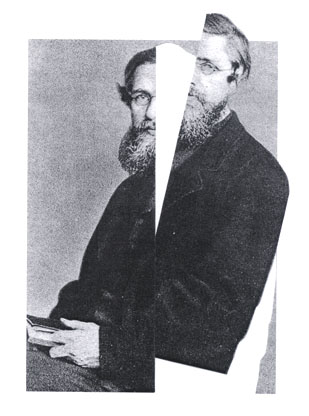
Alfred Russel Wallace is finally achieving fame for his scientific discoveries, 95 years after his death. Although Charles Darwin receives much of the credit for the theory of natural selection, the thinking of Alfred Russel Wallace was critical for the development of the discipline.
Working independently of Charles Darwin, Wallace published his theories of natural selection. Darwin, upon reading Wallace's theories, published his own findings.
The work of Wallace is getting more attention since David Quanmen of National Geographic has written a new article about him, entitle The Man who wasn't Darwin.
"Wallace, famed during his life as Darwin's junior partner and for his other contributions to science and social thought, fell into obscurity after his death, in 1913. In recent decades his renown has been revivified, both by scholars who mine every aspect of Darwin's life—Wallace was a crucial part—and by a few popular writers," writes Quanmen.
It's a fitting tribute for a man who has been forgotten by many in modern society. Alfred Russel Wallace remains a pivotal figure in the way we all look at the origin of life.
Source: Times of the internet
Wednesday, December 10, 2008
Scopolamine

Scopolamine, also known as levo-duboisine and hyoscine, is a tropane alkaloid drug with muscarinic antagonist effects. It is obtained from plants of the family Solanaceae (nightshades), such as henbane, jimson weed and Angel's Trumpets (Datura resp. Brugmansia spec.), and corkwood (Duboisia species [3]). It is among the secondary metabolites of these plants. Therefore, scopolamine is one of three main active components of belladonna and stramonium tinctures and powders used medicinally along with atropine and hyoscyamine. Scopolamine was isolated from plant sources by scientists in 1881 in Germany and description of its structure and activity followed shortly thereafter and much knowledge was acquired prior to 1881 as the alkaloid was known for a number of years as levo-duboisine.
Scopolamine has anticholinergic properties and has legitimate medical applications in very minute doses. As an example, in the treatment of motion sickness, the dose, gradually released from a transdermal patch, is only 330 microgrammes (µg) per day. An overdose can cause delirium, delusions, paralysis, dangerous elevations of body temperature, stupor and death.
All three major belladonna alkaloids are capable of producing complete muscarinic acetylcholine receptor blockade for varying lengths of time.
Etymology
Scopolamine is named after the plant genus Scopolia. The name "hyoscine" is from the scientific name for henbane, Hyoscyamus niger.
Physiology
Scopolamine acts as a competitive antagonist at muscarinic acetylcholine receptors, specifically M1 receptors; it is thus classified as an anticholinergic,anti-muscarinic drug. (See the article on the parasympathetic nervous system for details of this physiology.)
Medical use
In medicine, scopolamine has these uses:
- Primary:
- Treatment of nausea and motion sickness
- Treatment of intestinal cramping
- For ophthalmic purposes.
- As a general depressant and adjunct to narcotic painkillers
- Less often:
- As a preanesthetic agent
- As a drying agent for sinuses, lungs, and related areas.
- To reduce motility and secretions in the GI tract -- most frequently in tinctures or other belladonna or stramonium preparations, often used in conjunction with other drugs as in Donnagel original forumulation, Donnagel-PG (with paregoric), Donnabarb/Barbadonna/Donnatal (with phenobarbital), and a number of others
- Uncommonly, for some forms of Parkinsonism.
- As an adjunct to narcotic analgesia, such as the product Twilight Sleep which contained morphine and scopolamine, some of the original formulations of Percodan and some European brands of methadone injection.
- To enhance the pain-killing ability of various opioids.
- As an occasional sleep aid, and was available in some over-the-counter-products in the United States for this purpose until November 1990.
Nausea
Its use as an antiemetic in the form of a transdermal patch is the drug's most common medical application in the United States.
Ophthalmic
The drug is used in eye drops to induce mydriasis (pupillary dilation) and cycloplegia (paralysis of the eye focusing muscle), primarily in the treatment of eye disorders that benefit from its prolonged effect, e.g. uveitis, iritis, iridocyclitis, etc.
Memory research
Because of its anticholinergic effects, scopolamine has been shown to prevent the activation of medial temporal lobe structures for novel stimuli during spatial memory tasks.
Nicotine addiction
Scopolamine is being investigated for its possible usefulness alone or in conjunction with other drugs in assisting people in breaking the nicotine habit. The mechanism by which it mitigates withdrawal symptoms is different from that of clonidine meaning that the two drugs can be used together without duplicating or cancelling out the effects of each other.
Other medical uses
- It can be used as a depressant of the central nervous system, and was formerly used as a bedtime sleep aid.
- Anesthetic; Its use in general anesthesia is favored by some due to its amnesic effect. Scopolamine causes memory impairments to a similar degree as diazepam.[2]
- In otolaryngology it is used to dry the upper airway (anti-sialogogue action) prior to instrumentation of the airway.
- In October 2006 researchers at the US National Institute of Mental Health found that scopolamine reduced symptoms of depression within a few days, and the improvement lasted for at least a week after switching to a placebo.[3]
- Due to its effectiveness against sea-sickness it has become commonly used by scuba divers.[4][5]
Routes of administration
Scopolamine can be administered by transdermal patches,[6] oral, subcutaneous, ophthalmic and intravenous routes. The transdermal patch for prevention of nausea and motion sickness employs scopolamine base. The oral, ophthalmic and intravenous forms are usually scopolamine hydrobromide (for example in Donnatal).
Recreational use
Scopolamine, in common with the large percentage of anticholinergics which cross the blood-brain barrier such as diphenhydramine, orphenadrine, dicyclomine, trihexyphenidyl and related drugs, is said to produce euphoria at and around therapeutic doses as well as to potentiate this and other effects of morphine, methadone, hydromorphone, oxycodone and others. It is therefore occasionally seen as a recreational drug. The use of medical scopolamine/opioid combination preparations for euphoria is uncommon but does exist and can be seen in conjunction with opioid use.
Another separate group of users prefer dangerously high doses, especially in the form of datura preparations, for the deliriant and hallucinogenic effects. The hallucinations produced by scopolamine, in common with other potent anticholinergics, are especially real-seeming, repetitive, boring and unpleasant. An overdose of scopolamine is also physically exceedingly unpleasant and can be fatal, unlike the effect of other more commonly used hallucinogens. For these reasons, naturally occurring anticholinergics are rarely used for recreational purposes.
Scopolamine in transdermal, oral, sublingual, and injectable formulations can produce a cholinergic rebound effect when high doses are stopped. This is the opposite of scopolamine's therapeutic effects: sweating, runny nose, abdominal cramps, nausea, vomiting, vertigo, dizziness, irritability, and diarrhea. Psychological dependence is also possible when the drug is taken for its tranquilizing effects.
Potential use in interrogation
"The Use of Scopolamine in Criminology" by Robert E. House appeared in the Texas State Journal of Medicine in September, 1922 and was reprinted in The American Journal of Police Science, Vol. 2, No. 4, Jul. - Aug., 1931.
The use of scopolamine as a truth drug was investigated in the 1950s by various intelligence agencies, including the CIA as part of Project MKULTRA. Nazi doctor Josef Mengele experimented on scopolamine as an interrogation drug.
Criminal use
Traces of scopolamine were found in the body found in the cellar of Hawley Harvey Crippen, executed for the murder of his wife. It is unclear whether this caused death, and there is said to be some doubt that the body found was that of his wife.
Scopolamine has been used under the name burundanga in Venezuelan and Thai resorts in order to drug and then rob tourists. While there are unfounded rumors that delivery mechanisms include using pamphlets and flyers laced with the drug, not enough is readily absorbed through the skin to have an effect. However, spiked alcoholic drinks are occasionally used. In recent years the criminal use of scopolamine has become an epidemic. Approximately one in five emergency room admissions for poisoning in Bogotá have been attributed to scopolamine.[7]
Victims of this crime are often admitted to a hospital in police custody, under the assumption that the patient is experiencing a psychotic episode. A telltale sign is a fever accompanied by a lack of sweat.
In June 2008, more than 20 people were hospitalized with psychosis in Norway after ingesting counterfeit Rohypnol tablets containing Scopolamine. 11
Shamanic use
In Colombia a plant admixture containing scopolamine called Burundanga has been used shamanically for decades.
Witchcraft & Sorcery
Scopolamine was one of the active principles in many of the "flying ointments" used by witches, sorcerers and fellow travellers of many countries and cultures from millennia ago ostensibly down to the late XIX. Century or even to the present day. Scopolamine and related tropanes contributed both to the flying sensations and hallucinations sought by users of these compounds. Potions, solids of various types, and other forms were also used in some cases.
These ointments could contain any number of ingredients with belladonna, henbane, and other plants of the belladonna and datura families being present almost invariably; they were applied to the vaginal and/or anal mucosa and/or large areas of the skin and other mucous membranes (often using a broom as an applicator, the origin of the image of a witch riding a broom) with the objective being to see the Devil and/or be transported to the Sabbat.
The hallucinations, sensation of flying, often a rapid increase in libido, and other characteristic effects of this practise are largely attributable to the CNS and peripheral effects of scopolamine and other active drugs present in the ointments such as atropine, hyoscyamine, mandragorine, scopoline, solanine, optical isomers of scopolamine and other tropane alkaloids. Still other active chemicals with psychoactivity are present in other ingredients used in salves, ointments, potions, and other forms of drugs which contained ingredients like "water of aconite", bryony root, valerian, digitalis, wild carrot, sage, wormwood, ephedra, and relatives (Artemisia spp.), tobacco, toxic parts of potato and other plants in the Solanaceae family, thistles and daisies of various types, and other plants and ingredients from animal sources.
The inclusion of belladonna/datura type plants amongst the dozens of ingredients in the Haitian zombie drug is thought by some authorities to be at least somewhat likely, although scopolamine-bearing plant matter is almost certainly not the main active ingredient, which has been theorised to possibly be Tetrodotoxin or a related substance.
Adverse effects
The common side effects are related to the anticholinergic effect on parasympathetic postsynaptic receptors: dry mouth, throat and nasal passages in overdose cases progressing to impaired speech, thirst, blurred vision and sensitivity to light, constipation, difficulty urinating and tachycardia. Other effects of overdose include flushing and fever, as well as excitement, restlessness, hallucinations, or delirium. These side effects are commonly observed with oral or parenteral uses of the drug and generally not with topical ophthalmic use.
An extreme adverse reaction to high doses (or lower doses in those with hypersensitity to scopolamine and/or all anticholinergics) of drugs and other preparations containing scopolamine is temporary blindness which can last up to 72 hours. Extreme supertherapeutic doses of scopolamine can result in the effects on vision (mydriaisis, photophobia, and varying degrees of cycloplaegia) as well as "corner of the eye"-type hallucinations, often of insects to last anywhere from 72 hours to more than five weeks as reported in various references on the use of drugs.
Use in scuba diving to prevent sea sickness has led to the discovery of another side effect. In deep water, below 50–60 feet, some divers have reported pain in the eyes that subsides quickly if the diver ascends to a depth of 40 feet or less. Mydriatics can precipitate an attack of glaucoma in susceptible patients, so the medication should be used with extra caution among divers who intend to go below 50 feet.
Drug Interactions: Side Effects And Use Against Pain
Twilight Sleep
When combined with morphine, scopolamine is useful for pre-medication for surgery or diagnostic procedures and was widely used in obstetrics in the past; the mixture also produces amnesia and a tranquillised state known as Twilight Sleep, also the name of a proprietary drug available in the past in ampoules of injectable fluid containing morphine sulphate and scopolamine hydrobromide (and in some cases the phenothiazine anti-nauseants prochlorperazine or promethazine as a third ingredient). Although originally used in obstetrics, it is now considered dangerous for that purpose for both mother and baby.
In current times, diagnostic procedures and surgery requiring a patient to be put in twilight sleep state are performed with sedation provided by a strong short to intermediate-acting benzodiazepine such as midazolam (Versed®) which also has the amnestic effect desired in such cases. Such drugs can be used with or without morphine or a similar agent depending on the instance; it is also common for a patient to receive a moderately high dose of an opioid (sometimes morphine, hydromorphone, or a closely-related drug but also quite often levorphanol, piritramide, oxymorphone, fentanyl, or pethidine) a short time before the procedure begins in order to allay apprehension by means of generating euphoria, co-operativeness, sociability and anxiolysis. Haloperidol or a similar drug may also be used in such instances.
Adjuvant, Atypical & Potentiator for Opioid Therapy for Chronic Pain
A method of mixing scopolamine with opioids which generally uses less scopolamine has found some use in treatment of breakthrough pain in chronic pain patients and some acute cases of severe pain, especially that of neuropathic origin and/or which interferes with sleep. The effect is also of interest to licit and illicit users of morphine and other drugs in that scopolamine, a euphoriant of a different type in its own right, can accentuate the "rush" of injected opioids such as morphine and hydromorphone and potentiate a broad spectrum of narcotic effects of many opioids in general. The subsequent steadier euphoria and sleepiness are also intensified.
Several side effects such as nausea and miosis are also reduced by the comcomitant administration of opioids and scopolamine in most cases. Others such as difficulty concentrating and constipation can be compounded, and in some patients the increase in somnolence or sleepiness as severe enough that administration of a stimulant may be helpful.
The boost in the euphoria and other therapeutic effects of opioids is a synergistic effect which in some patients also results from sublingual administration of hyoscyamine and some other anticholinergics after codeine, dihydrocodeine or similar drugs taken via the oral or rectal route have begun to work. This PRN technique for treatment of sharp, severe nerve pain (which usually complements a preventative strategy which includes the administration of acyclovir with the opioid and perhaps cyclobenzaprine or orphenadrine on a continuing basis for prevention) is equally effective as the above and can actually produce a rush of sorts lasting up to 15 minutes even though both agents were administered by mouth.
The administration of scopolamine with other drugs in a daily schedule of opioids, adjuvants, other drugs for related conditions and side effects for continuing efficacy against chronic neuropathic pain is also useful in that scopolamine fills several niches including anti-nauseant, adjuvant to analgesics, etc. Extended-release tablets or even the scopolamine patch are used for this purpose. Scopolamine can also be used in topical compounds for treatment of nerve pain; these are often creams or gels which can also include many other drugs used for pain and related conditions -- scopolamine can be used in addition to or in place of cyclobenzaprine, amitryptiline, orphenadrine, gabapentin, trazadone, and the like in such mixtures. Acyclovir creams or ointments can serve as intensifiers for topical preparations which contain scopolamine in many of the cases in which the latter is used; acyclovir is also available for prescription compounding in many countries and can be added to the main mixture.
Excessive side effects in such a cases may indicate a change to an adjuvant with milder effects; literally dozens of options are available and come from such pharmacological categories as:
- first-generation anti-depressants
- non-steroidal anti-inflammatory drugs (NSAIDs)
- anticholinergics of certain chemical classes and with predominantly anti-muscarinc activity
- some quinine-like drugs
- first-generation antihistamines
- anti-convulsants
- beta blockers
- centrally-acting stimulants
- caffeine, theobromine and related drugs
- NMDA antagonists
- muscle relaxants
- local anaesthetics
- non-barbiturate sedative-hypnotics
- benzodiazepines
- drugs with action on seritonin and/or norepinephrine re-uptake like duloxetine, tramadol (as either adjuvant or main opioid -- drugs which can be used as the main opioid which combine NMDA antagonist, SSRI and/or SSNI activity include methadone and relatives, levorphanol, piritramide, ketobemidone, other members of the tramadol group and other synthetic opioids); and others,
- systemic anaesthetics like ketamine or nitrous oxide
...and many other categories.
Side Effects Compounded
In all of these cases as with all instances of simultaneous use of opioids and anticholinergics, close monitoring of bowel function and pre-emptive measures like increase in fibre intake to deal with the possibility of severe constipation and rare complications thereof like paralytic ileus is required.
History
Scopolamine was one of the earlier alkaloids isolated from plant sources and has been in use in isolated, purified forms such as free base and various salts, especially hydrochloride, hydrobromide, hydroiodide and sulphate, since its isolation by German chemists in 1881 and in the form of plant-based preparations since antiquity and perhaps pre-historic times.
Scopolamine was one of the active ingredients in Asthmador, an over the counter smoking preparation marketed in the 1950s and 60's claiming to combat asthma and bronchitis.
Scopolamine was used from the 1940s to the 1960s to put mothers in labor into a kind of "twilight sleep" that did not stop pain, but merely eliminated the memory of pain by attacking the brain functions responsible for self-awareness and self-control. Often, this caused a kind of psychosis, followed by post-traumatic stress-like memories in thousands of new mothers.[8]
Scopolamine was an ingredient used in some over-the-counter sleep aids before November 1990 in the United States, when the FDA forced several hundred ingredients allegedly not known to be effective off the market. Scopolamine shared a small segment of this market with diphenhydramine, phenyltoloxamine, pyrilamine, doxylamine and other first generation antihistamines, many of which are still used for this purpose in drugs like Sominex, Tylenol PM, NyQuil, etc.
Popular culture
- (1940) In one of crime fiction's all-time classic novels, Farewell, My Lovely (1940) by Raymond Chandler, Marlowe gets shot full of Scopolamine in a private sanitarium in order to both shut him up, and to pump him for knowledge, when he gets too close to the truth on a case, or rather several cases entangled into one another, that he is working on (the identity of Velma and the whereabouts of Moose Malloy).
- "I had been shot full of dope to keep me quiet. Perhaps scopolamine too, to make me talk." (quote by Marlowe in Farewell, My Lovely)
- "There's a drug called scopolamine, truth serum, that sometimes makes people talk without their knowing it. It's not sure fire, any more than hypnotism is. But it sometimes works." (quote by Marlowe in "Farewell, My Lovely")
- 1957: In popular culture, scopolamine has achieved a moderate level of notoriety via its mention in the film I Was a Teenage Werewolf, where Dr. Alfred Brandon uses it as part of his endeavor to regress the titular character to his "primitive roots." According to Dr. Liz Kingsley's film review site And You Call Yourself a Scientist, Brandon's line "Prepare the scopolamine!" is "the only scientifically accurate line in the whole film."
- 1961 and 1968: Scopolamine is featured in the World War II action classic The Guns of Navarone and the subsequent Where Eagles Dare as a truth serum employed by the villanous SS both movies came from works of Alistair MacLean.
- 1940s-1960s: In a letter from Tangier to Allen Ginsburg, author, artist, &c. William S. Burroughs recounts an incident in which he shot up a series of ampoules of a methadone preparation containing scopolamine without considering the effect of the latter drug; later in the evening he was reportedly red as a beet, had totally disrobed and was running around yelling and trying to get away from monsters; he needed to be restrained by the owner of the building in which he rented an apartment.
- 1968: In Carlos Castaneda's series of books The Teachings of Don Juan: A Yaqui Way of Knowledge, the Datura plant is the favored shamanic, revelatory drug of the titular character. The book explores, in depth, Castaneda's experiences under the influence of the drug, as well as the rites surrounding its use and preparation.
- 1972: In Fear and Loathing In Las Vegas by Hunter S. Thompson, the narrator's attorney mentions an incident in which he was given an entire datura root as a gift, at the entire thing at once and went blind, had to be taken back to to house in a wheelbarrow and started making noises like a raccoon (Procyon lotor).
- 1974: In episode 1 "That'll Be The Day", of the fourth series of the TV Series Callan, Callan is interrogated by the KGB using the drug Scopolamine as a truth serum.
- 1979: Scopolamine is also mentioned several times in Robert Ludlum's Matarese Dynasty, a fictional spy novel in which the drug is known for its uses as a truth serum.
- 1987: Stephen King's novel Misery depicts the protagonist self-administering a morphine-scopolamine injectable to stave off pain and withdrawal symptoms (after being deliberately given narcotic analgesics to produce physical dependence subsequent to being rescued after an automobile crash by a nurse with a huge stash of narcotics who also wanted the main character to re-write pervious novels to suit her ideas about how they should have ended) during an escape attempt.
- 1990s: The X-Files Red Museum shows Scopolamine as a suspect agent in usage for kidnappings.
- 1990: Scopolamine is mentioned by the villain Cain as one of the cutting agents of the drug Nuke in Robocop 2
- 1994: In the book Blood Hunt by Ian Rankin (written under the pseudonym Jack Harvey) scopolamine, under the name Burundanga is used by the main Character, Gordon Reeve, to gain information and access to facilities in order to find his brother's killer.[9]
- 2000: In the pilot episode for Season 1 of CSI: Crime Scene Investigation, a female thief seduces a man to sleep with her. She applies scopolamine to her nipples, which knocks the man out when he ingests it orally. After she robs him and makes her escape, the scopolamine which she absorbed into her skin causes her to pass out as well.
- 2000: Scopolamine was the drug Michael claimed he was injected with either by the military and/or the aliens in "The Mars Records". It might be worth noting in this context that scopolamine can cause confabulation (the mixing of memory and facts).
- 2007: In the episode "Airborne", one character in the TV show House, M.D. is shown wearing a scopolamine patch.
- 2008: In the TV series Knight Rider 2008, in episode 4, "A Hard Day's Knight", Mike Knight is poisoned with hyoscine, and needs to find an antidote within 3 hours.
- 2008: In the TV series My Own Worst Enemy, in episode 2, "The Hummingbird", Henry is poisoned with scopalamine and is told he must have his heart shocked within the next minute or he will die.
- 2008: In the TV series Law & Order: Special Victims Unit, in episode 10 of season 10, "Smut," serial rapist, Eric Lutz, uses Scolopamine (also called "Columbian Devil's Breath") to drug and control his victims. In the episode the drug is described as leaving the victims conscious and pliable but with no memory of the attack.

Source: Wikipedia


